As an Amazon Associate we earn from qualifying purchases.
Sugar-free energy drinks remove the sugar and keep everything else — including the full caffeine load. Whether that is better for you depends entirely on which of the two you were worried about, and the labels make that harder to see than it should be.
What actually changes
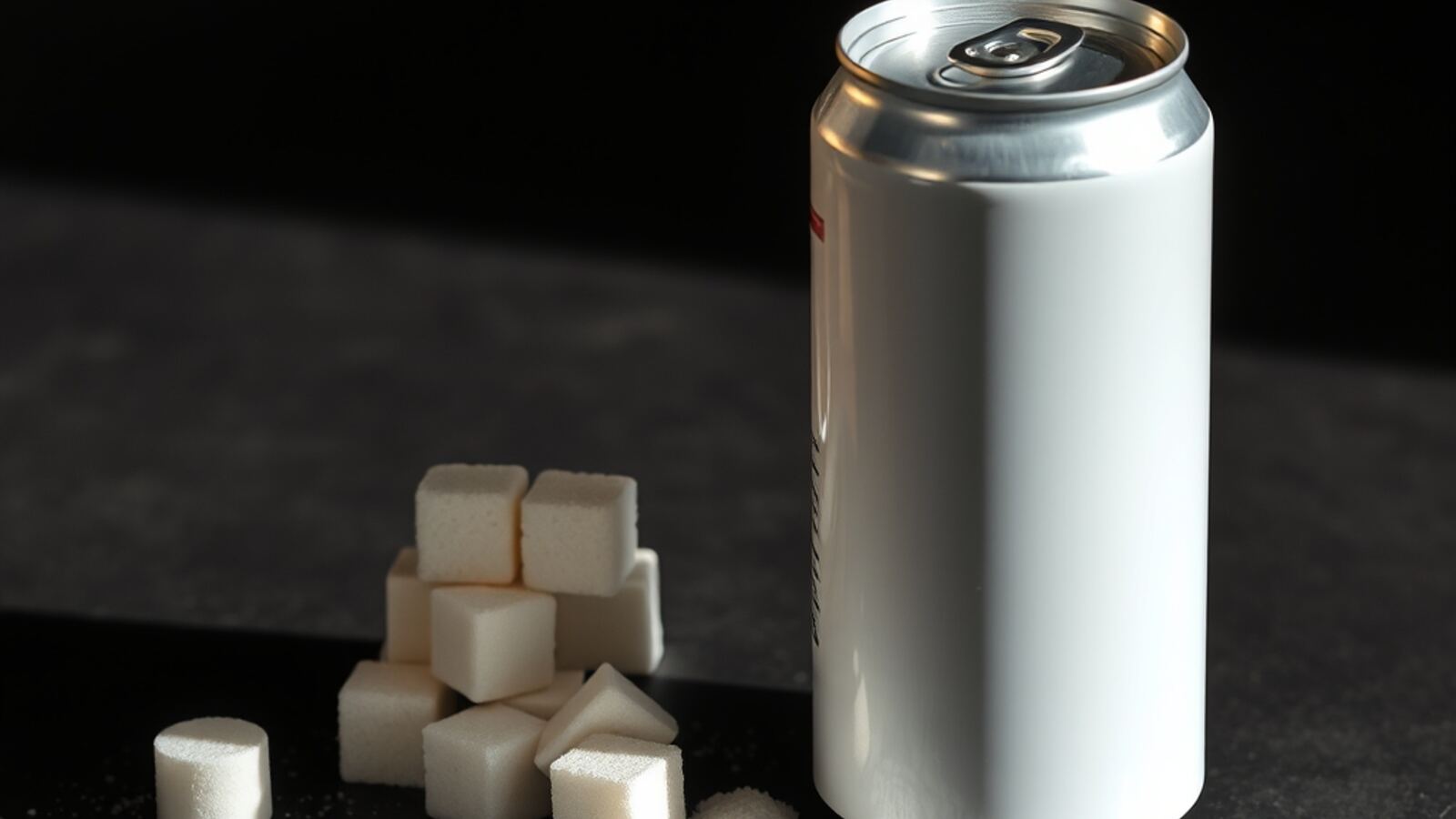
Across the 7 sugar-free cans in our directory, the pattern is consistent: calories fall by more than 90 %, caffeine does not move at all. Monster Original is 185 kcal and 160 mg of caffeine; Monster Zero Sugar is 11 kcal and the same 160 mg. Removing sugar is a calorie decision, not a stimulant one. Between two full-sugar cans the gap can be large too: 62.5 g against 42 g in our Rockstar vs Monster comparison.
Put plainly: the calorie difference is real and large, the caffeine difference is zero. Anyone who switched to a zero-sugar can hoping for a gentler drink switched for the wrong reason — and anyone who switched to cut calories got exactly what they came for.
The caffeine is the part with firm limits
European food safety guidance puts the adult ceiling at 400 mg a day and 200 mg in a single serving. A 500 ml can at 160 mg uses 40 % of the daily figure and most of the single-serving one. Two cans in a day exceed the single-serving guidance twice and approach the daily ceiling before any coffee. That is true of the sugar-free version exactly as much as the original.
The 400 mg daily and 200 mg single-serving figures come from EFSA and apply to healthy adults. They are not warnings about one can; they are budgets. A 160 mg can uses 40 % of the day’s allowance — fine on its own, and not fine alongside coffee, tea and a second can.
Sweeteners: what is settled and what is not
The sweeteners used in these cans — typically sucralose and acesulfame K — are approved for use in the EU, with acceptable daily intakes far above what a can delivers. That part is settled by the regulators.
It is worth separating two questions that get merged. Whether these sweeteners are approved and within safe intake at the doses a can delivers — settled, yes. Whether replacing sugar with them helps someone lose weight over years — not settled, and the WHO’s 2023 advice was explicitly about that second question, not about safety.
What is not settled is the longer-term picture. Research on sweeteners and appetite, and on the gut microbiome, is active and not yet conclusive; the WHO advised in 2023 against using non-sugar sweeteners for weight control specifically, while stopping short of a safety warning. Anyone telling you this is fully resolved in either direction is ahead of the evidence.
Acidity, the part that gets ignored
Sugar-free cans are as acidic as sugary ones, and acidity is what erodes enamel. Removing the sugar reduces the feeding of oral bacteria but does not change the pH. Drinking through a straw and not brushing immediately afterwards both help more than the sugar-free label does.
The swap, can by can
Each sugar-free can below sits beside the calorie load it replaces. The caffeine column is the one that does not change.
| Drink | Size | Caffeine | Per 100 ml | Sugar | kcal |
|---|---|---|---|---|---|
| Monster Energy Zero Sugar | 500 ml | 160 mg | 32.0 mg | 0 g | 11 |
| Rockstar Energy Drink Original Zero Sugar | 500 ml | 150 mg | 30.0 mg | 0 g | 15 |
| Monster Energy Ultra (Ultra White) | 500 ml | 150 mg | 30.0 mg | 0 g | 10 |
| Prime Energy Original (European format 330 ml) | 330 ml | 140 mg | 42.4 mg | 0 g | 7 |
| Celsius Summer Vibe | 355 ml | 114 mg | 32.1 mg | 0 g | — |
| Celsius Peach Vibe | 355 ml | 114 mg | 32.1 mg | 0 g | 11 |
| Red Bull Zero Sugar (Sugarfree / Zero) | 250 ml | 80 mg | 32.0 mg | 0 g | 8 |
| Burn Energy Drink (500 ml can) | 500 ml | 160 mg | 32.0 mg | 75 g | 315 |
| Rockstar Energy Drink Original | 500 ml | 150 mg | 30.0 mg | 62 g | 260 |
| Monster Energy Juiced Mango Loco | 500 ml | 160 mg | 32.0 mg | 46 g | 195 |
| Monster Energy Juiced Pacific Punch | 500 ml | 160 mg | 32.0 mg | 43 g | 180 |
Who should be more careful than the label suggests
The 400 mg daily figure is an adult average. It does not apply to everyone: pregnancy guidance is 200 mg for the whole day, which one 500 ml can nearly reaches. Adolescents have no established safe threshold and several European countries restrict sales to them. People on medication metabolised by the same liver pathway — some antibiotics, some antidepressants — clear caffeine more slowly, so the same can lasts longer.
None of that is specific to sugar-free versions. It is the caffeine, and removing sugar does not touch it — which is exactly the confusion these labels invite.
What “zero” is allowed to mean
Under EU labelling rules a drink can be called sugar-free at up to 0.5 g of sugar per 100 ml — so a 500 ml can labelled zero may legally contain up to 2.5 g. In practice the cans in this directory declare a flat 0 g, and Open Food Facts agrees. But the tolerance exists, and it is why we report the declared figure rather than the marketing word.
Teeth: the part the sugar-free label does not fix
Enamel erosion is driven by acidity, and sugar-free cans are as acidic as sugary ones — typically pH 3.0 to 3.5, comparable to a soft drink. Removing the sugar removes the fuel for the bacteria that cause caries, which is a real gain, but it does not change the pH at all.
Two habits help more than the label does: drink it in one sitting rather than sipping over an hour, and do not brush for thirty minutes afterwards — enamel is temporarily softened and brushing abrades it.
Sleep, and why the timing matters more than the version
Caffeine’s half-life is around four hours in adults (2 to 8 hours depending on the person, according to EFSA). A 160 mg can at 4 p.m. leaves roughly 67 mg circulating at 9 p.m. and 28 mg at 2 a.m. Sugar-free changes none of that: the two versions of the same drink carry the identical dose.
Clearance is largely genetic — variants of the CYP1A2 gene make some people slow metabolisers, for whom the same can lasts noticeably longer. You cannot read that off a label, but you can test it by moving the can earlier in the day and seeing whether sleep onset changes.
What to check on a can that says zero
Under EU rules a drink may be labelled sugar-free at up to 0.5 g per 100 ml, so a 500 ml can could legally hold 2.5 g. The 11 sugar-free cans in this directory all declare a flat 0 g, and Open Food Facts agrees — but the tolerance exists, which is why we report the declared number rather than the marketing word.
Then check the caffeine figure, because that is the one the sugar-free claim says nothing about. If it is not printed in milligrams, the warning notice tells you only that the drink exceeds 150 mg per litre — not whether it is at 320 or 420.
So: bad for you?
Compared with the full-sugar version of the same drink, a sugar-free can is a clear improvement on calories and dental caries risk, and identical on caffeine. Compared with not drinking one, it still delivers a caffeine dose that counts against your daily total. If your concern was sugar, the swap works. If it was caffeine, the swap changes nothing — and the number to watch is on the back of the can.
The one habit worth changing regardless of which version you buy: read the milligrams before the flavour. It is the only figure on the can that has a daily limit attached to it.
Sugar-free cans, if that is the swap you are making
Search links for the swap described above. The caffeine does not change: check it separately.
The swap in the table above, in the format that costs least per litre.
€15 to €25 per 12-pack See on Amazon
For the part of the sweetener question that is still open.
€14 to €24 per pack See on Amazon
Amazon affiliate links: if you buy through them the site earns a commission at no extra cost to you.
Frequently asked questions
Is sugar-free better than regular?
On calories and dental caries risk, clearly yes: over 90 % fewer calories and no fuel for the bacteria that cause decay. On caffeine, identical — the two versions of the same drink carry the same dose.
Do sweeteners in energy drinks cause weight gain?
The evidence is not settled. The sweeteners used are approved with acceptable daily intakes far above what a can delivers, but the WHO advised in 2023 against relying on non-sugar sweeteners for weight control — a statement about long-term effectiveness, not about safety.
Are sugar-free energy drinks bad for your teeth?
They are as acidic as sugary ones, typically pH 3.0-3.5, and acidity is what erodes enamel. Removing the sugar removes the caries risk but not the erosion risk. Drink it in one sitting and wait thirty minutes before brushing.
How many can you drink in a day?
One 500 ml can at 160 mg uses 40 % of the 400 mg daily figure EFSA gives for healthy adults, and most of the 200 mg single-serving figure. Two cans exceed the single-serving guidance twice and leave little room for coffee or tea.